Kicking off
The climbing refinement found in current autos obliges a thorough knowledge of diagnostic mechanisms, chiefly involving On-Board Diagnostics II (OBD2) and Tire Pressure Monitoring Equipment (TPMS). Throughout Europe, Asia, and the US, these innovations perform using diverse frequencies. OBD2 rules are largely aligned globally, essentially utilizing ISO 9141-50, KWP2000, CAN, and others, but regional implementations can present minor discrepancies. TPMS, however, is where notable frequency differences appear. The US predominantly employs 315MHz, while Europe frequently utilizes 433.92MHz, and Asia reveals a more dispersed range including both frequencies and supplementary bands. Hence, exact diagnostic instruments must be furnished with the potential to process these various frequencies to enable effective diagnosis and maintenance.
Interpreting TPMS Sensor Frequencies: A Global Guide (Europe, North America, Asia)
Understanding rubber surveying instrument (TPMS) gauge spectra over the earth appears challenging. Generally, North districts largely utilize 315 MHz, nonetheless some fresh vehicles adopt 433 MHz. However, Europe and most of Asia primarily serve on the 433 MHz range, with some provincial variations found particularly in identified Asian states. Hence, vital to prove the true waveband ahead of purchasing TPMS readers to confirm suitability and shun conceivable complications.
Electric Auto Analyzers: OBD2 Compatibility and TPMS Integration
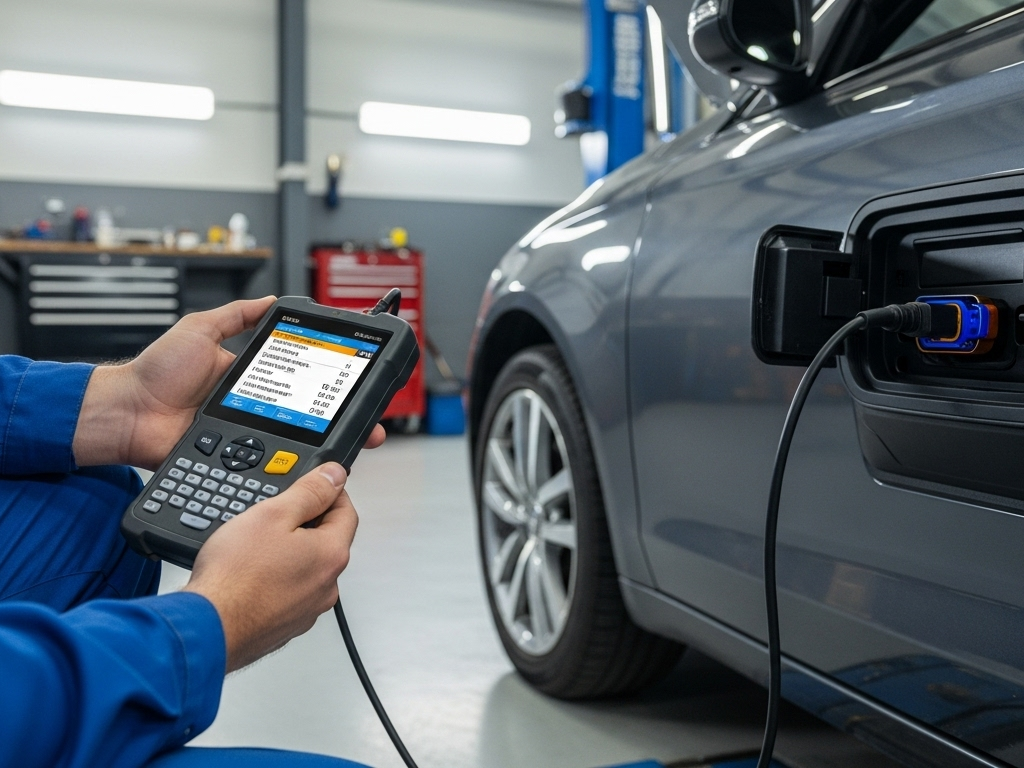
Current battery-powered vehicle testing devices are increasingly featuring critical functionality, principally with respect to both typical On-Board Diagnostics II (OBD2) interface and Tire Pressure Monitoring System (TPMS) connection. Many green motors utilize OBD2 ports for accessing critical system information, granting technicians and users to diagnose possible errors. Furthermore, smooth TPMS unification provides exact tire volume displays, furthering to better well-being and energy performance. This combination of OBD2 linkage and TPMS support demonstrates a consequential step in voltage-driven car assessment.
Tire Pressure Frequency Discrepancies: The Continent vs. North American Territory vs. Oriental Region - A Thorough Evaluation
The sensors responsible for supervising tire pressure—TPMS—operate on unique radio signals, leading to essential regional distinctions. USA predominantly utilizes 315 MHz, though some advanced vehicles are transitioning to 433 MHz. The EU mandates 433.92 MHz, a distinct frequency to certify compatibility across nations. Eastern Asia exhibits a heterogeneous landscape, with certain countries using 315 MHz, others 433 MHz, and still varied regions employing a composite of both. This divergence presents challenges for garages and motor vehicle users when dealing with replacement TPMS receivers or diagnostic hardware, mandating careful verification of regional requirements to preclude failures and secure proper efficiency of the TPMS.
Vehicle Scanners for EV Cars: Tire Pressure Monitoring System Review & Radio Wave Breakdown
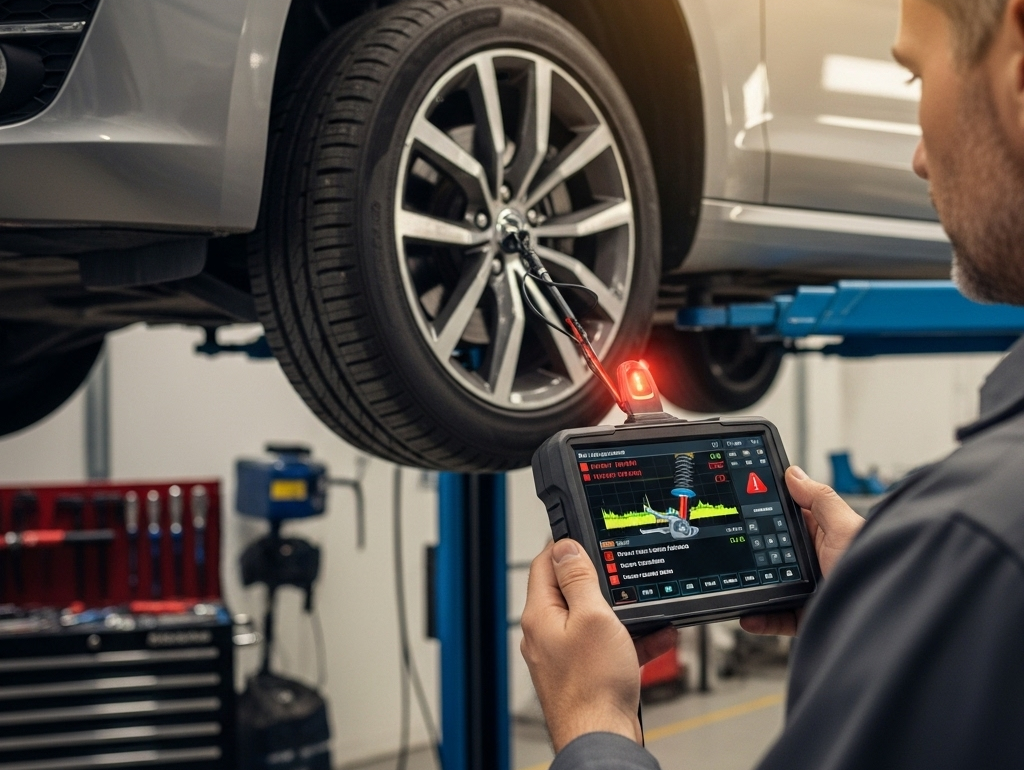
Advanced motor vehicle analyzers are quickly advancing to serve electrically powered transport units, principally with respect to wheel pressure monitoring review. Unlike fuel combustion engines, zero-emission cars present specialized hurdles when it comes to pressure sensor system verification. Many electrified automobiles use various tire data devices wavelengths requiring the device to precisely decode the bandwidth in use. This capacity facilitates repairmen to simply inspect inflation levels but also trace the accurate radio signal being radiated by the tire sensor receivers, helping in meticulous inspection of errors.
The US Tire Pressure Monitoring Systems Signals: Do You Should Be Aware Of?
Dealing with the world of auto TPMS can be a puzzle, primarily due to the varying frequencies utilized across European Region, Asia, and the United States. Eurozone’s vehicles predominantly use 433.92 MHz, while many countries employ 315 MHz and 433.92 MHz, creating a troublesome situation for mechanics. In the US, both 315 MHz and 433.92 MHz are prevalent, with 315 MHz being more dominant. Ergo, understanding these regional divergences is imperative for accurately diagnosing TPMS concerns and selecting the appropriate programming tools.
Developing an Primary Elements: Auto Scanning, EV Motors, & Wheel Pressure System Unit Bandwidth Detection
Pertaining to experienced mobile unit mechanics, purely understanding those crucial elements about automobile systems, EV motor vehicle structures, plus air pressure detection device broadcast detecting signifies some fundamental subsequent degree. The latter topics venture around introductory diagnostics, demanding customized implements plus proficiency with the aim of unerringly pinpoint in addition to remedy advanced problems involving vehicle wheel data, current system operation, even drive unit malfunction warnings. As well, correctly recognizing tire sensor systems instrument wavelengths – generally oscillate throughout alternative companies including categories – generally important in efficient configuration.
EV Auto Assessment: Using OBD2 Scanners to Troubleshoot TPMS
Resolving Tire Pressure Monitoring Systems pressure detection tools in electric vehicles zero-emission cars often includes more than exclusively visual inspection. Modern OBD2 testers offer noticeable ability to get TPMS data and spot potential failures. Utilizing these instruments, technicians can interpret fault codes, check sensor status, and even apply sensor analyses, allowing for reliable diagnosis of pressure detection problems and minimizing outage periods. It is is especially important given the increasing complexity of EV platforms.
Managing Tire Pressure Monitoring Systems Signals: A Step-by-step Introduction for Eurozone, the East, and the US & Canada
Adequately managing pressure gauges in European Region, Eastern Asia, and the Continent requires a in-depth awareness of the varying wave channels they implement. Unlike a harmonized system, the globe often maintains specific bandwidths. Such as Continental Europe primarily utilizes 315 Megahertz and 433 million nine hundred twenty kHz, while North American Region commonly relies on 315 MHz though a few modern cars should incorporate four-three-three point nine two MHz. Asia shows a higher complexity environment, with several spectral regions being employed, tpms frequency europe asia us subject to the territorial division and auto maker.
- Evaluate local regulations regarding radio wave.
- Review your car's handbook for designated spectrum.
- Implement a signal reader fit to translating several signals.